
The Labour government will reportedly lay out its response to a Code of Practice on trans people’s rights to access so-called ‘single-sex’ spaces at some point in May, the Equalities Office has said.
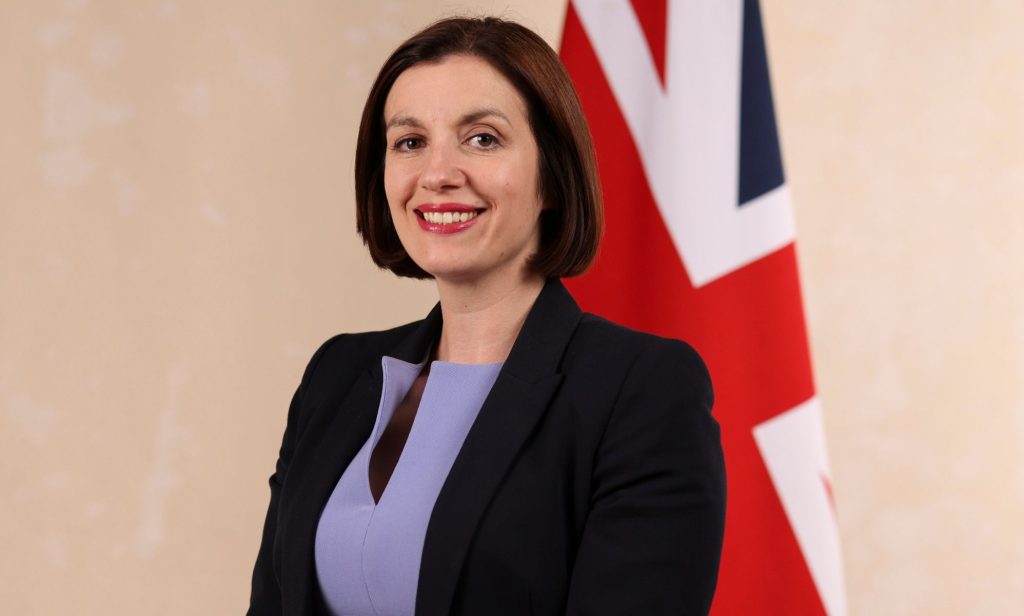
Equalities Minister Bridget Phillipson said the government plans to act upon a revised version of guidance, brought by the Equality and Human Rights Commission (EHRC), after the 2026 local elections have taken place on the 7th of May.
The Minister said in a statement provided to the House of Commons on Tuesday (14th April) that she plans to take “urgent action” in applying the Code across the UK.
“The Code will apply across Great Britain and as we are currently in the pre-election period for the devolved administrations, we are unable to make further announcements on this matter at this time,” she wrote.
A draft version of the Code was originally handed to the Equalities Office in September following a controversial public consultation on proposed changes that would effectively see trans people banned from using services, such as toilets or changing rooms, consistent with their correct gender.
That draft was then subject to what government sources described as a ‘constructive’ review after former EHRC chair Kishwer Falkner was replaced by Dr Mary-Ann Stephenson in December.
Phillipson confirmed the draft, which has still yet to be made public, had been updated and handed back to the government on the 13th of April.
“We are grateful to the EHRC for their work on the updated draft Code following engagement and further legal analysis,” she said. “The EHRC is rightfully focussed on ensuring the updated Code is robust, accessible, and ensures duty bearers can be confident that it is a clear and accurate explanation of the law.”
Trans people face spike in harassment following Supreme Court judgment
Updates to the Code of Practice were proposed last year shortly after the UK Supreme Court published its controversial judgment on For Women Scotland Ltd v The Scottish Ministers.
The Court’s five-judge panel held that the Equality Act 2010’s definition of the terms ‘men’ and ‘women’ referred to ‘biological men’ and ‘biological women’ respectively, effectively excluding trans men and women from that definition.
UK barrister Robin Moira White derided the judgment in May last year, saying that it “wouldn’t survive a trip to the European Court of Human Rights.”
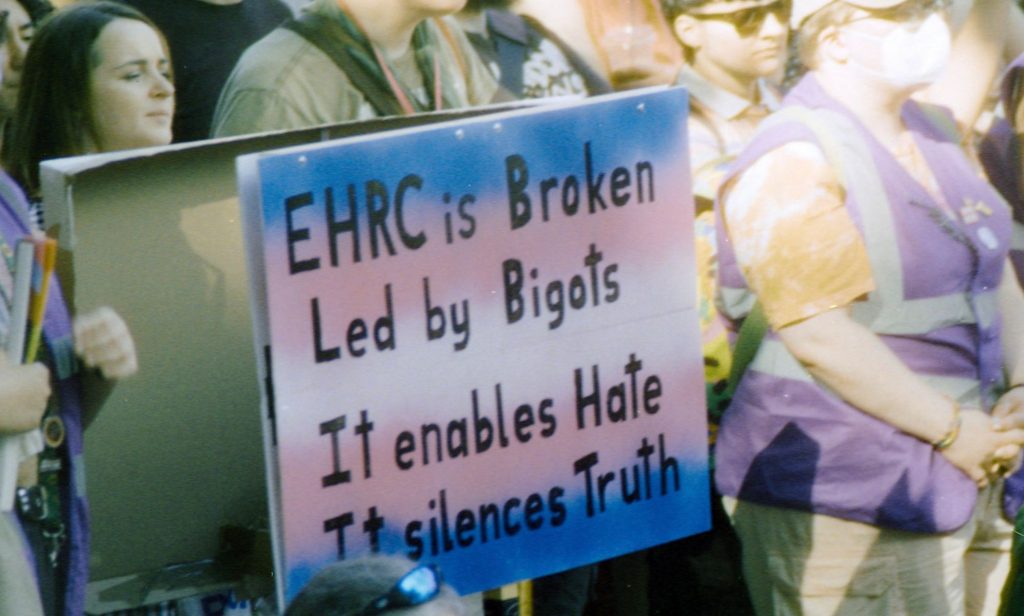
A report from the trans-led CIC TransActual, published in August, highlighted the impact that the ruling was having on the trans community. It reported a spike in cases of harassment not just against trans people, but also intersex and cisgender people, particularly those who are gender non-conforming.
The ruling’s impact has also hit service providers and private business owners, over 670 of which signed an open letter in September which outlined significant financial and moral risks that could see several businesses go bust.
Dr Stephenson said in a statement published this week that the EHRC hoped the revised draft, once published, would “strengthen duty bearers’ understanding of the law and how it applies across a range of the scenarios they encounter day-to-day.”
“The UK government recently provided us with a narrow set of comments on the draft Code of Practice we submitted in September,” she added. “Having considered this feedback alongside consultation responses and further legal analysis, we have made adjustments where they help the Code provide legally accurate, practical guidance that is useful to duty bearers.”
A government spokesperson told WhatTheTrans!? That it was now “working at pace” to lay the Code out in May after the election period.
“We are getting it right, ensuring duty bearers are able to uphold the law,” they added.