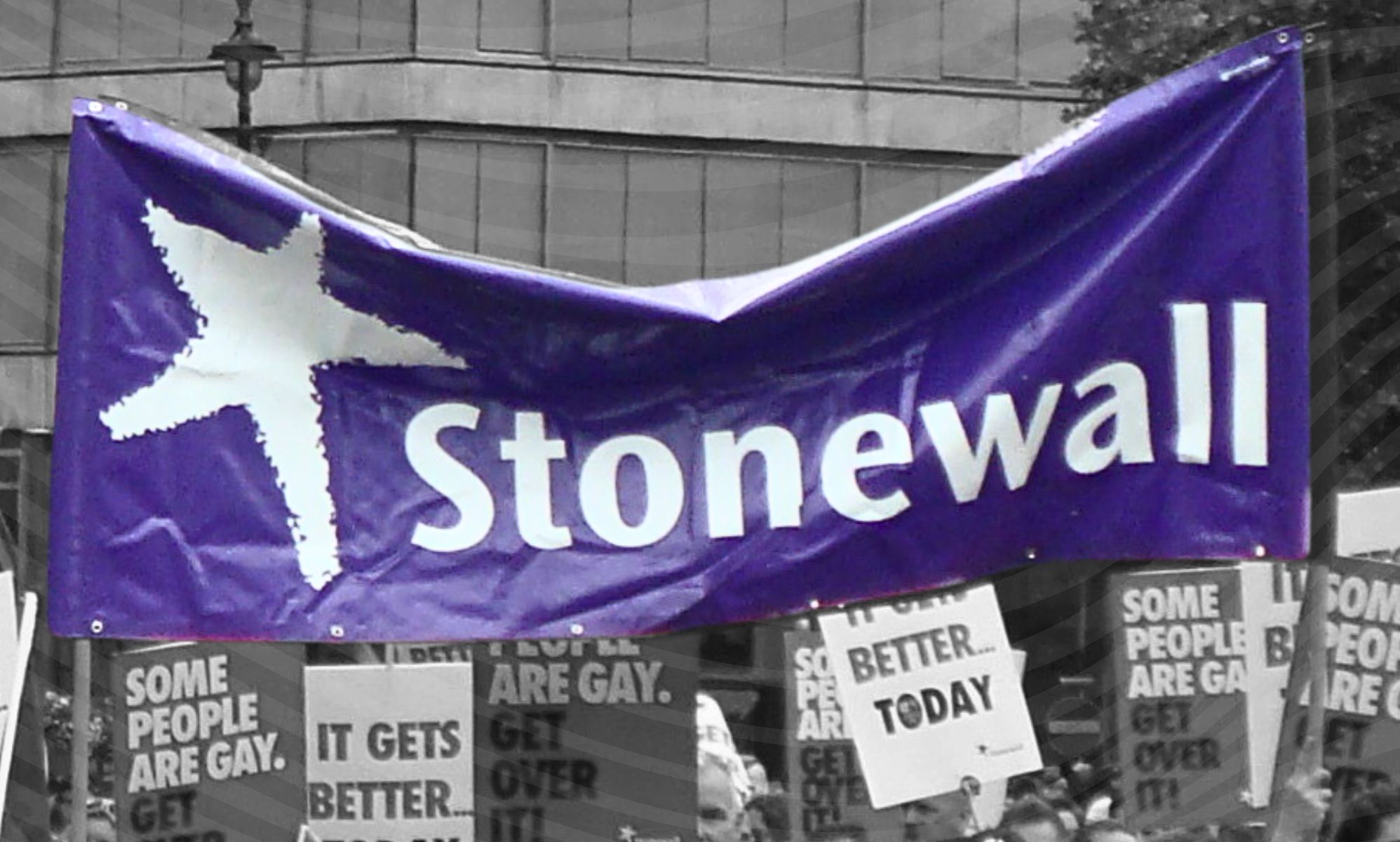
Something about the way discussions on Stonewall UK have been framed over the past decade or so has always irked me. Nowadays, reading up about the escapades of Europe’s largest LGBTQIA+ charity feels akin to learning your doddering old grandfather just knocked over a lamppost speeding under the influence; age-old lessons to respect your elders and the impact he had in your upbringing may compel you to be lenient, but sooner or later a line is going to get crossed and someone is going to get hurt.
That line was crossed for many when Stonewall’s incoming chair, Kezia Dugdale, managed to display rather remarkable lack of awareness on LGBTQIA+ issues at break-neck speed when, during an interview on The Guardian’s Today in Focus, she expressed admiration and “huge respect” for the proverbial mascot of ‘gender-critical’ punditry and part-time author J. K. Rowling.
Her unbelievably inappropriate praise for a woman who regularly professes that trans youngsters don’t exist was about as well-received as a mid-morning package of anthrax. Activists began publicly lambasting her remarks as out-of-touch while the Trans Advocacy & Complaints Collective (TACC), a prominent UK feminist organisation, voiced concerns over Dugdale’s understanding of trans rights, or lack thereof.
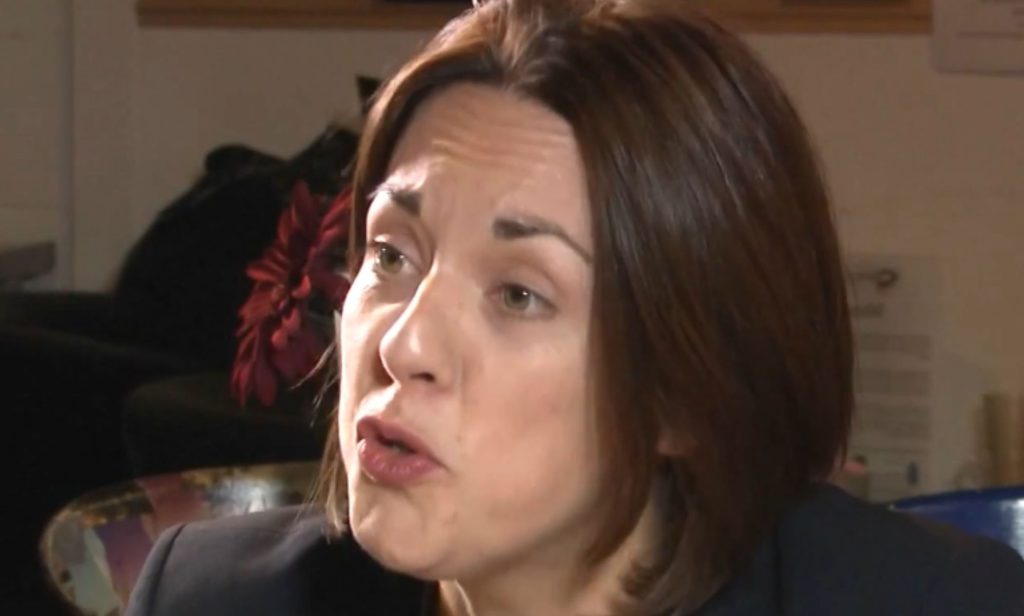
The former Scottish Labour leader’s eventual apology faced equal criticism, not least because it took a full five days for Stonewall to issue a statement. Some refused to accept claims that she was “truly sorry”, as well as her expressed opposition to “anyone that seeks to or causes harm to anyone in our community”, branding it a stale attempt to curry favour (and donations). Others were simply uninterested to hear what she had to say, arguing the entire controversy was so ridiculous that it borders on Alan Partridge levels of cartoonishly unprofessional.
I, for one, felt nothing but weary cynicism from Dugdale’s words. Make no mistake, I was undoubtedly outraged to hear that she views Rowling’s well-documented rhetoric against trans people, which includes misappropriating sexual violence statistics to paint trans women as “creeps, voyeurs, paedophiles, and rapists”, as simply a “different position”. This time, however, the outrage was directed squarely at Stonewall for once again managing to find new innovative ways to disappoint me.
The prevailing view from many dipping their toes in the discourse seems to be that, whether borne of ignorance or malice, Dugdale and, by extension, Stonewall UK, have officially crossed a line. While I certainly agree with that view, I feel it’s ignoring the countless examples of the organisation proving through its own naïveté that it is ill-equipped to deal with the political and legislative crises that is quite literally killing trans people across the UK.
This is the organisation that openly praised the Cass Review upon its publication as a “vital” component in a mission to overhaul gender-affirming care provision for trans youngsters, despite reports suggesting it has only harmed them further. It is the organisation whose 2025 strategy failed to acknowledge the institutional rise in transphobic rhetoric across the UK in the same year that the Prime Minister of Great Britain and Northern Ireland professed that trans women are not women and trans men are not men. Primarily, it is the organisation whose inaction and silence on certain key issues facing the trans community has been felt.
These and so many other historic examples represent Stonewall UK’s ignorance on what trans people need or are even fighting for. They are well-intentioned mistakes – its comments on the Cass Review at the very least reaffirmed the right for trans youth to access life-saving gender-affirming care – but they are still mistakes. Like the intolerant remarks of an elderly drunk relative, there’s only so many times you can brush them off.
These are not criticisms I revel in making. Stonewall has, in its 37-year history, shaped LGBTQIA+ rights in ways that are difficult to quantify. It was itself created in response to a crisis of regression, launched by a handful of activists in a cramped Limehouse flat as a Thatcherite Britain continued to press its boot against the necks of an already suffering community. It took so little and turned it into an institution driven by change and the impacts of its campaigning, from repealing Section 28 to legalising same-sex marriage, cannot be understated.
That reverent legacy is exactly why its frequent failings on trans rights are so infuriating. We are once again in a uniquely devastating cultural moment for LGBTQIA+ rights and, rather than stepping up, Stonewall UK is too busy mopping up discharge of a controversy that would have been pitiful six years ago. This is not 2020 any more, J. K. Rowling’s rhetoric has moved far beyond feigned concerns over the sanctity of sex. Either Dugdale is aware of this and thinks the trans-exclusionary misinformation mill is permissible, or she understands these issues so little it would be sidesplitting if she wasn’t about to lead one of the most influential LGBTQIA+ organisations of the western hemisphere.
I am willing to give the benefit of doubt and chalk this up to another example of cisgender-fuelled ignorance, but regardless this absolutely needs to be a moment of self-reflection for Stonewall UK’s management. If they want to fulfil their mission of protecting the fundamental rights of every LGBTQIA+ person in the UK and behind, then they need to educate themselves and start treating the rise in cultural and political transphobia with the seriousness it demands. They have already shown their willingness to learn and understand in the way they have tackled recent issues such as the government’s hand in approving the EHRC’s Code of Practice on single-sex service provision.
I fully believe things can be turned around, but the work needs to be done now because I and so many others are running out of patience. We are being actively pushed out of public life and attacked, and I have no intention of waiting around for Stonewall to learn its lesson so that something can be done.