Labour must ensure it complies with international human rights laws when making decisions about trans people the Council of Europe (CoE) has said.
The human rights organisation and principal organ of the United Nations General Assembly listed the ‘current climate’ for trans people in the UK as one of its key concerns in its 2025 Annual Activity report.
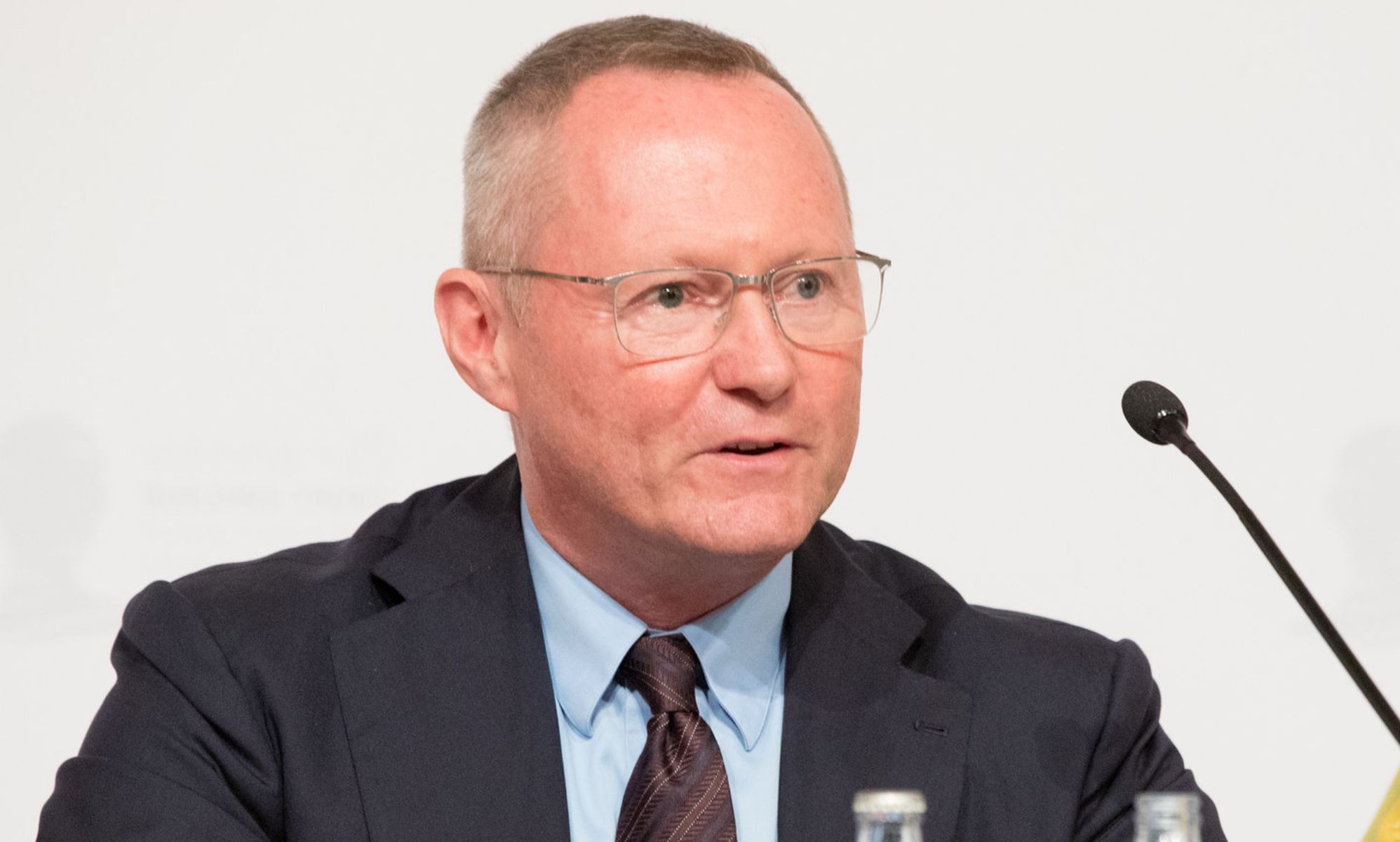
Published on Wednesday (22 April), the document outlines key observations made by the Commissioner for Human Rights, Michael O’Flaherty, during his visits to each CoE’s 46 member states in 2025.
Each year, the Commissioner meets with national authorities in each country to ensure they comply with international human rights laws, including the European Convention on Human Rights (ECHR).
In his observations on human rights in the UK, O’Flaherty expressed particular concern in how authorities, including the Equality and Human Rights Commission (EHRC) and the government, had been treating trans people.
“[The Commissioner] expressed concern about the current climate for trans people and reiterated that all relevant legal or policy developments must be human rights compliant,” the report reads.
His concerns come following the year anniversary of the UK Supreme Court’s judgment on For Women Scotland Ltd v The Scottish Ministers. Handed down on 16 April 2025, the ruling declares that, in the Court’s legal opinion, the definition of a woman under the Equality Act 2010 is restricted exclusively to what it calls ‘biological women’.
In response, the EHRC amended its Code of Practice for services, public functions, and associations – non-statutory guidance that tells service providers how to comply with equality law – which it handed to the Equalities Office for review.
If approved, it will be sent to Parliament who will then consider whether to make it statutory.
The draft Code has garnered particular scrutiny from human rights and LGBTQ+ organisations over fears it may result in a ban on trans people using public toilets.
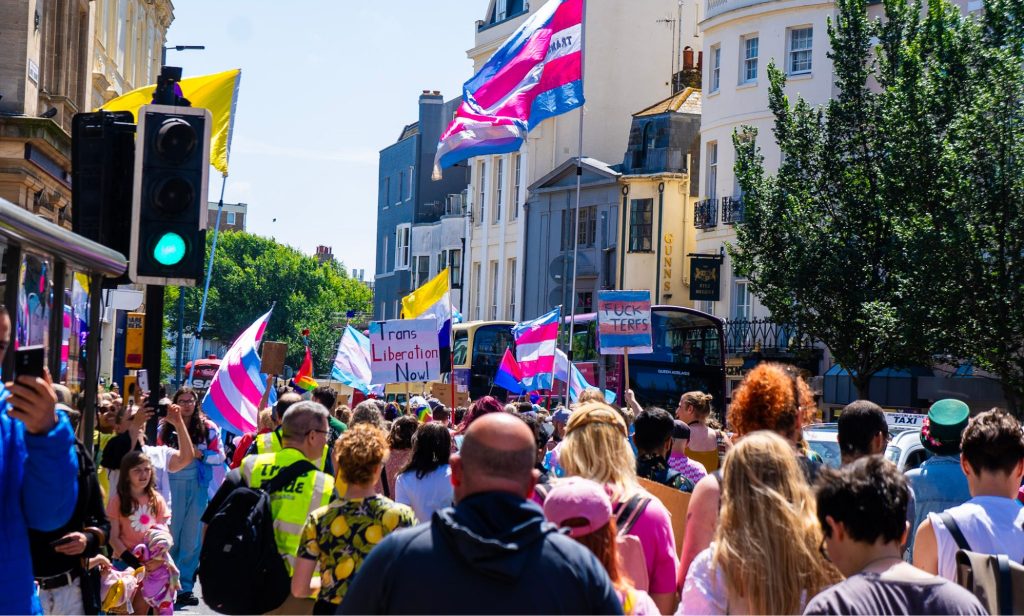
Following his visit to the UK in July last year, a few months after the judgment had been handed down, O’Flaherty said he was concerned that trans people were being subjected to “intense political and public debate and scrutiny” and face “acute marginalisation across all areas of life.”
He urged Parliament in a letter published on 3 October 2025 to recognise the “important role” it has as a “guarantor of human rights” and in “ensuring coherence and compliance.”
The letter also urged authorities to avoid any legal or policy developments that would violate trans people’s rights to gender recognition under the Gender Recognition Act 2004, adding that any “blanket practices or policies” that would force trans people to out themselves would violate Article 8 of the ECHR.
“I am concerned that a debate about violence against women, framed in a way that restricts the human rights and freedoms of trans people, risks undermining the comprehensive, evidence-based approach needed to address this epidemic,” he wrote at the time.
EHRC Code amended, but concerns remain
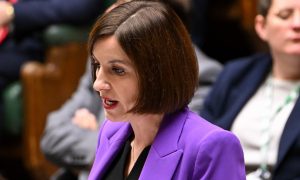
Earlier this month, Equalities Minister Bridget Phillipson said the Government planned to lay the Code before Parliament after the 2026 local elections in May.
Government sources claimed the draft guidance had been through a ‘constructive review’ after EHRC new chair, Dr Mary-Ann Stephenson, replaced Baroness Kishwer Falkner in December.
Falkner had previously faced criticism from the Minister after urging the government to approve the guidance “as soon as possible.” In response, Phillipson told the EHRC and its then-chair to focus “a little less on public debate.”
In a statement to the House of Commons on 14 April, Phillipson said she was grateful to Dr Stephenson for her work in making the Code more ‘robust’ and ‘accessible’, expressing her confidence that the new draft is “clear and accurate.”
While news of the updates was broadly welcomed, concerns still remain over Dr Stephenson’s position on trans rights given her historical association with ‘gender critical’ campaigners.
Last year, she admitted donating to the legal fund of ‘gender critical’ barrister Allison Bailey, saying to The Telegraph that she was “upset at women being harassed or sacked from their jobs for peaceful expression of legally protected beliefs.”
A spokesperson for the EHRC said: “All those who work at the Equality and Human Rights Commission, including our Chair and Board of Commissioners, take our obligation to protect equality and champion everyone’s rights under the Equality Act 2010 extremely seriously. This includes upholding the rights of those with the protected characteristic of gender reassignment. A shared and correct understanding of the law is essential to that endeavour.
“As Britain’s independent equality regulator, we uphold and enforce the Equality Act. We do not make the law – it’s our job to accurately explain how it works in practice – as we have done at every opportunity since the Supreme Court’s judgment on the definition of ‘sex’ in the Equality Act.”
Inequality ripe across Europe, Commissioner O’Flaherty says
In his opening observations for the report, O’Flaherty wrote that Europe had, like the rest of the world, seen “shocking and worsening levels of inequality” in the wake of the COVID-19 pandemic.
He blamed the growing distrust between member states and their citizens and the rise in ‘populist politics’ for the waft of threats to human rights in countries across Europe.
“There is the sheer scale of human rights abuses and violations that we see across the world,” he wrote. “The levels of violence are higher than they have been for a very long time; there have been more wars in recent years than in a generation.”
The Commissioner urged member states to acknowledge the “significance of the moment” by putting human rights at the heart of public affairs.
“we need to recognise the significance of this time in history, the accident of the moment of history, in which we, are living. We must acknowledge the treasure of human rights that we risk losing.”