Photos © 2025 “Blue Boy Trial” Film Partners
In 1969, a verdict was delivered in a criminal trial that resulted in a moratorium on GRS in Japan for the next three decades [*]. The trial involved an intersection between medical ethics, prostitution, police power, and eugenics. It became known as the Blue Boy Trial.
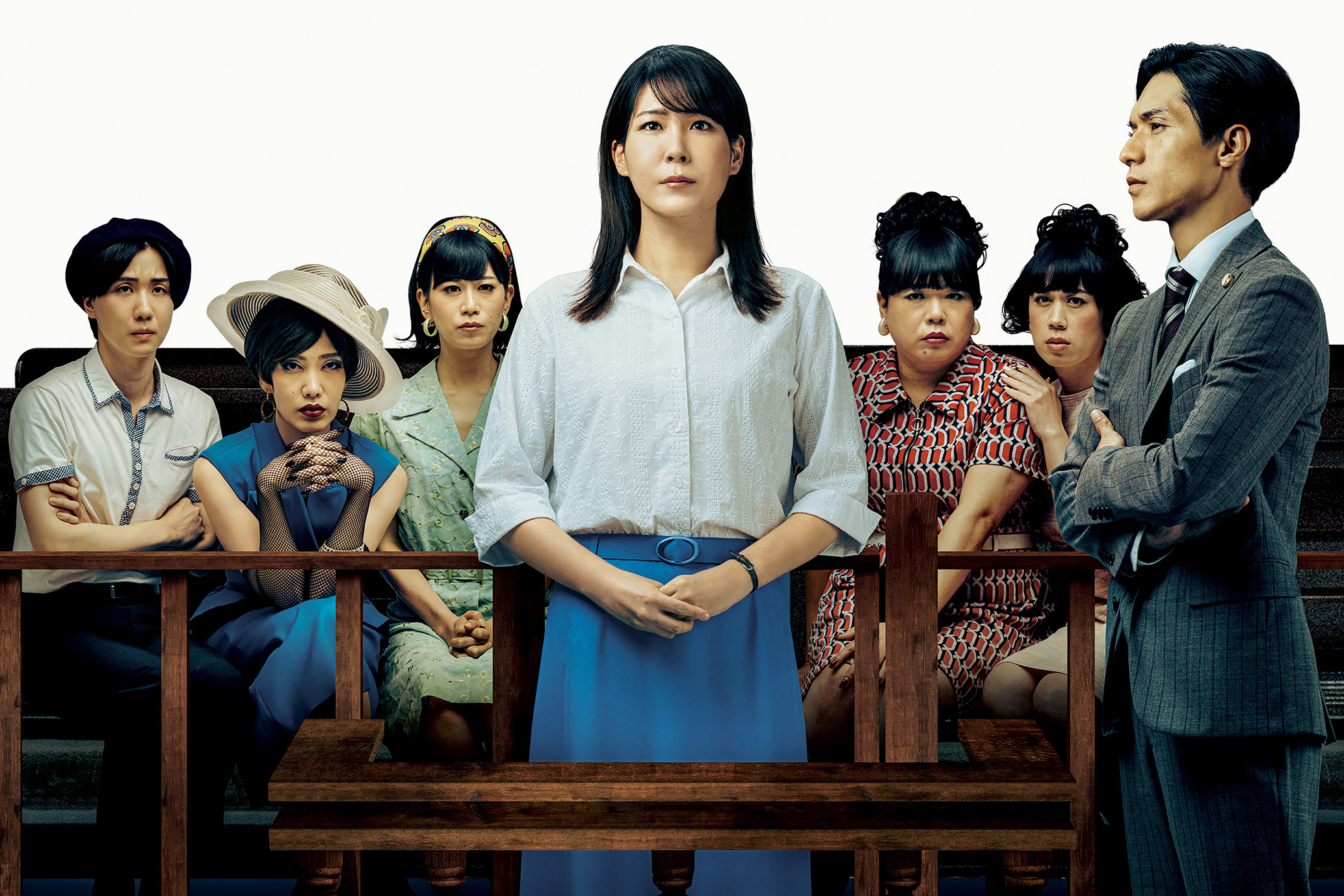
The 2025 film of the same name, written by Miura Maiki and directed by trans director Iidzuka Kashō, is a dramatization of the trial and the events surrounding it. Unfortunately, many of the details regarding the individuals involved have been lost to time, leaving it to the screenwriter and director to fill in the blanks. This comes in the form of the stories of three trans women, Sachi (played by trans actress Nakagawa Miyu), Ahko (played by drag artist Izumi Sexy), and Mei (pronounced “May”, played by trans singer-songwriter and actress Nakamura Ataru) [**]. This film stands out among films on trans lives for both being directed by a trans director and having been cast with trans actors in key roles.
Portraying Stories Within a Story
The focus of the film is on the stories of Sachi, Ahko, and Mei, told through the backdrop of the titular Blue Boy trial. Each reveals their understanding of their own gender through both testimony at the trial and how each is shown to live their lives.
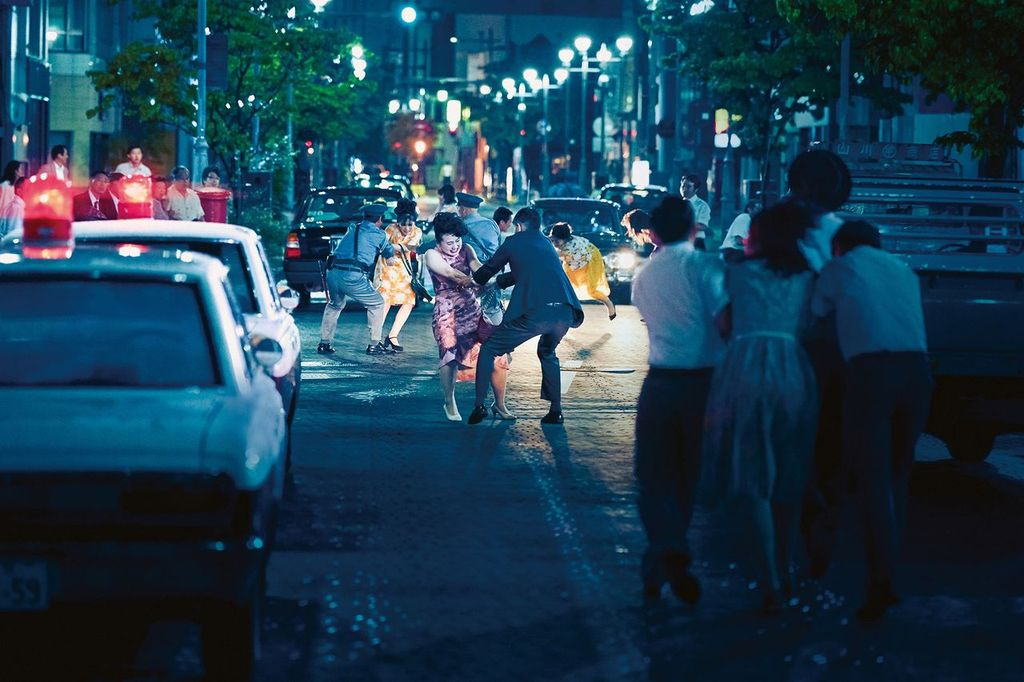
Mei and Ahko make early appearances, both being arrested in the initial prostitution sting that sets off the events leading to the trial. Mei is interrogated by an officer and reminds him that “as a legal male” they have absolutely nothing to keep her on. Meanwhile, Ahko, needing to relieve herself, is taken to the men’s room and instructed to use the urinal. She refuses, telling the officer accompanying her that she “doesn’t have a you-know-what”, and heads into a stall. A surprised look comes across the officer’s face when he realizes just what she means as he peers through the open stall door, mouth agape (very likely this was a traditional squat toilet that would have left very little to the imagination).
This sets the stage for the arrest of gynecologist Akagi Masao (played by Yamanaka Takashi), who performed GRS on the two. He is arrested and charged under the country’s eugenics law for performing “unauthorized and unwarranted” sterilizations, as well as for an unrelated narcotics charge, seemingly tacked on for good measure. For the police and prosecutors, the trial is seen as a way to close what they see as a “loophole” in Japan’s newly minted prostitution ban. For Dr. Akagi and his patients, however, it is a fight to preserve necessary medical care.
Dr. Akagi’s defense lawyer, Kanō Taku (played by Nishikido Ryō), asks Mei and Ahko to testify at trial. Both do so in their own way, Mei striking a both confident and defiant tone, and Ahko doing her best to answer the defense lawyer’s questions. However, Ahko pushes back during her testimony when Kanō tries to paint her as mentally ill. Clearly, our lawyer needs to do his homework.
While Mei goes back to the red-light district and Ahko looks to set up her own above-board cabaret, Kanō becomes aware of another of Dr. Akagi’s patients: Sachi. He implores this quiet, unassuming woman to testify at the trial. Sachi, looking to start a life with her fiancé Wakamura Atsuhiko (played by Maehara Kō), is conflicted as to what to do. Testifying at a public trial with the press in attendance could mean revealing her trans status to the world, bringing unwanted scrutiny to both herself and her fiancé. However, not testifying could mean her losing access to a doctor that she trusts to complete the final stage of her GRS and let her have the life she desires.
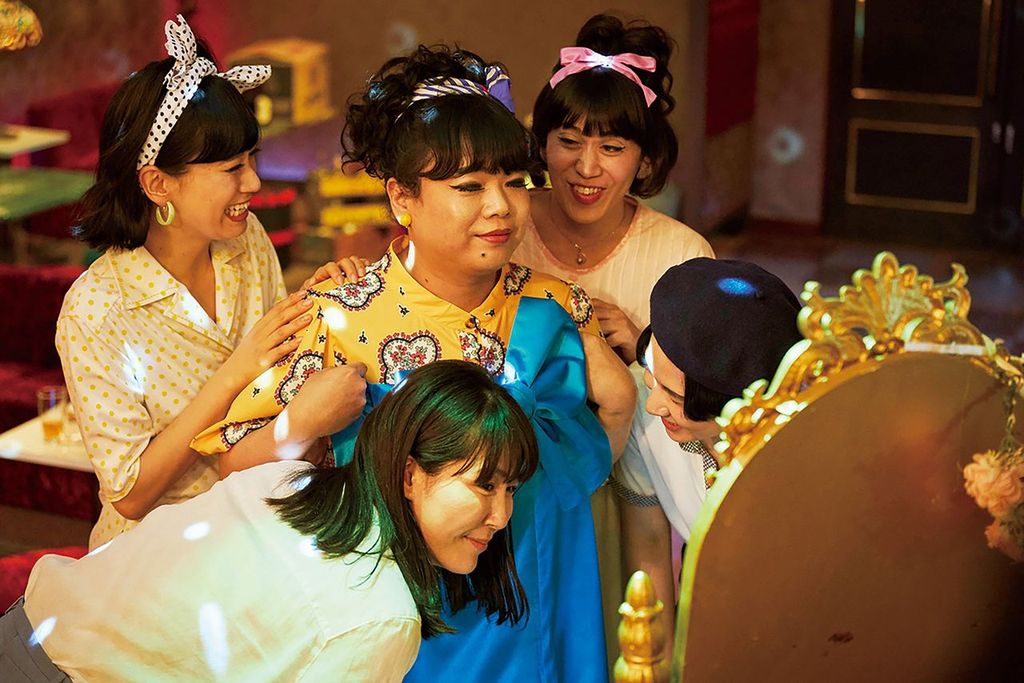
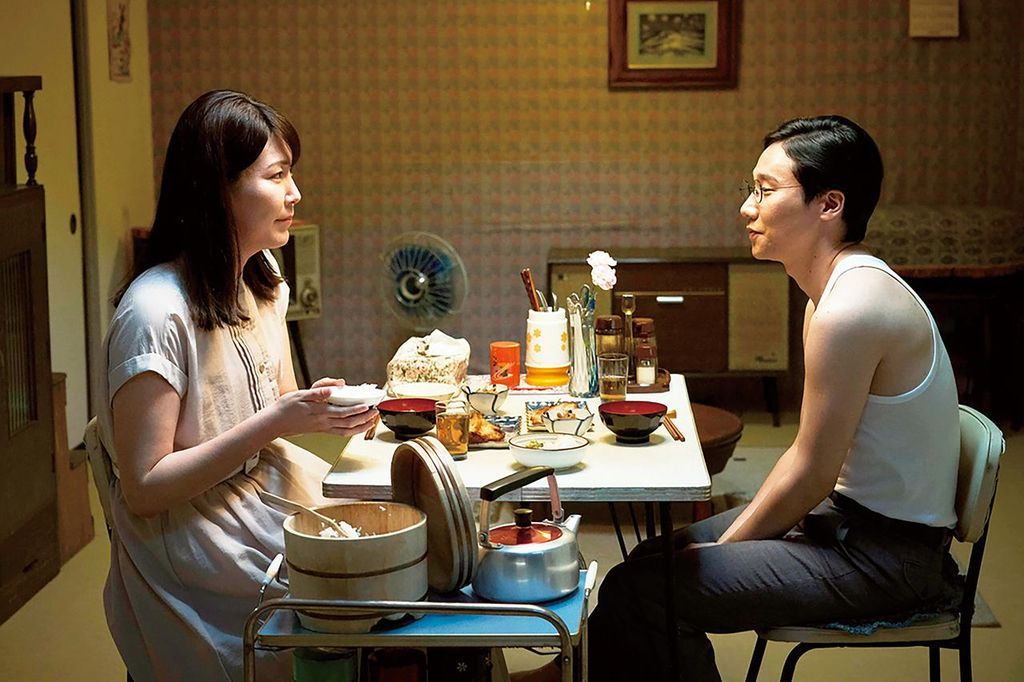
Each of the three is depicted in a unique fashion, opening a small window onto their very different lives. These depictions feature their own mix of joy as well as tragedy, humanizing them as they are being demonized by prosecutor Tokita Kōtarō (played by Yasui Junpei) in court.
One thing that viewers may need to be aware of is the large amount of transphobia that is aimed at the women in the film, often in ways that will be familiar today. The film features depictions of loss of employment, loss of humanity, and violence. In fact, given the ending of the trial is a matter of the historic record (Dr. Akagi is found guilty of both charges and GRS ceases to be performed domestically), it winds up being the joys of life that the women and their friends experience that help buoy the tale and keep the viewer from falling into despair.
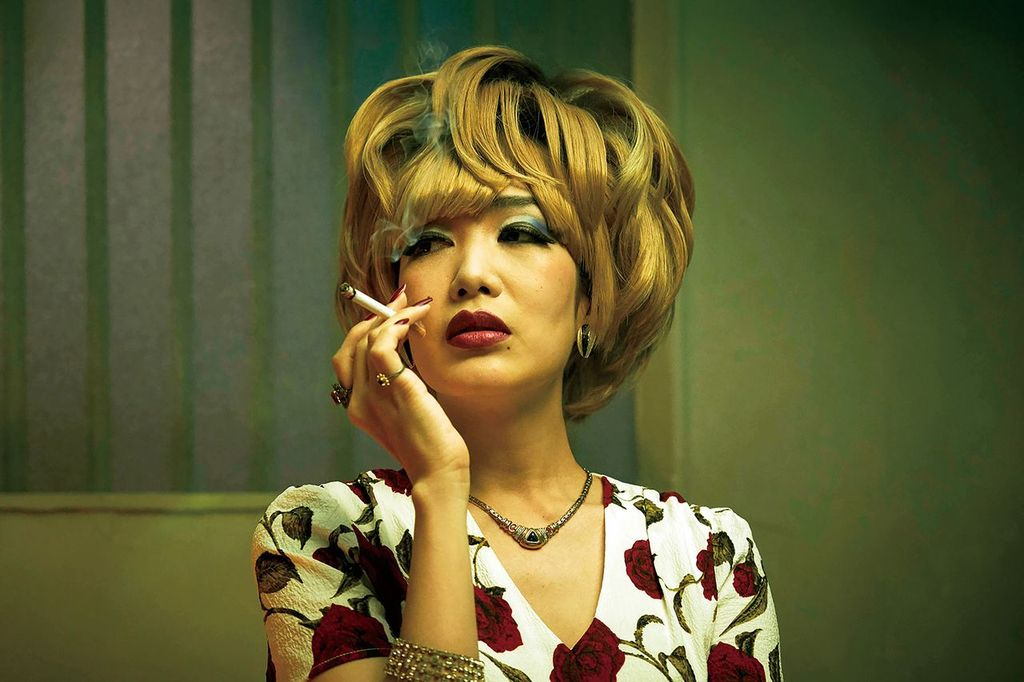
Overall, the film is one that feels like it is aimed mostly at cis audiences, given the time and attention spent not only to the expositions by the trans characters, but also the character development of the lawyer, Kanō. Kanō appears to serve as an interlocutor for cis viewers as he develops an understanding of trans lives across the length of the film, contrasting this with his own life and small family.
Regardless of any shortcomings, the film retells a part of trans history that isn’t widely known even within Japan, and as such deserves to be viewed by a wide audience.
Blue Boy Trial plays as part of the Japan Foundation Touring Film Programme 2026 which takes place in cinemas around the UK from 6 February to 31 March 2026.
For further information: https://www.jpf-film.org.uk/films/blue-boy-trial
A Trial with Far-Reaching Repercussions: The Historical Background
For the sake of completeness, we will include an overview of the historical background the film is based on.
In 1965, police were called to address a noise complaint at a building in the Akasaka district of Tokyo, an area at the time known for its gay nightlife. The building in question had been host to an illegal gay night club. According to police, among those in attendance were a number of male prostitutes. Officers noted that some of them only used female names, didn’t want to be held with the men, and refused to use the urinals. It was revealed that they “no longer had the equipment” to use them (accounts vary as to how this was uncovered). Upon further questioning, they said that they had received GRS from a local gynecologist. [***]
Learning this, the police sought some way to charge the gynecologist and get this type of procedure shut down. They were seemingly not so much concerned with people seeking out these surgeries, to say the least the lives of trans people in general. Instead, they wanted to close what they saw as a loophole in the country’s 1958 prostitution ban. The ban only stipulated one act as forbidden: penis-in-vagina sex, assumed to be between a legal male and legal female. But what of a neovagina, possessed by someone who was legally male? The law had no answer to that, and so the police sought a “solution”. The one they eventually arrived at was the 1948 Eugenics Protection Act.
In post-war Japan, some lawmakers were concerned that the country’s devastated infrastructure couldn’t support a burgeoning population, among other issues. As a means to address this, as well as to try and remove “undesirable” traits from the gene pool, they introduced legislation that would allow doctors to sterilize people, even forcibly, if specific conditions were met. These conditions included a person having certain kinds of mental illness as well as heritable conditions. This extended most famously to sufferers of Hansen’s Disease (aka leprosy, a bacterial infection). Doctors performing sterilizations that were not for an approved purpose could be jailed, fined, or both. This formed the backbone of the Eugenics Protection Act. (It also is worth mentioning that parts of this law also served as the justification for the legalization of abortion in Japan, which, after conditions were further relaxed in later years, made Japan one of the most progressive on abortion care in the world at the time.)
In 1965, Dr. Akagi Masao, was arrested and charged with two counts: violation of the Eugenics Protection Act as well as the Narcotics Control Act. While the narcotics charge was fairly straightforward (he had sold opioids from his clinic’s stock to an acquaintance), this was the first time anyone had been charged under the Eugenics Protection Act. The police, it seems, were looking to make an example of Dr. Akagi, and if the sterilization charge didn’t stick, they likely hoped the narcotics charge would at least send a message. In the end, Dr. Akagi was found guilty of both, but given a suspended sentence and a fine.
The trial and its verdict did not create an explicit ban on GRS in Japan, but it had a chilling effect on the medical community. The court decision noted how none of the diagnostic procedures used overseas had been employed by Dr. Akagi (readers may be familiar with these as the early gatekeeping standards of care), and that standards of care had yet to be established in Japan. This resulted in a moratorium on the domestic performance of GRS, and trans care in general seems to have entered into something of a dark age, with no medical group willing to create native standards. In 1996, the Eugenics Protection Act was finally repealed and replaced with the Maternal Body Protection Act, which excised the eugenics language from the law while still retaining elements deemed necessary for maternal health, such as the provision of abortions.
Not long after, Saitama Medical University began exploring whether they would be able to offer surgeries domestically, leading to the drawing up of domestic treatment guidelines as well as the first post-Blue Boy Trial GRS in Japan in 1998 on a trans man. This in turn led to renewed recognition of trans health and trans lives, culminating several years later in passage of the Gender Identity Disorder Special Case Act, which allows people to change their legal sex if certain stringent conditions are met. Our regular readers will no doubt be familiar with this law, as one of these conditions (ironically, the requirement for permanent sterilization) was found to be unconstitutional in a recent Japanese Supreme Court ruling.
Notes
[*] In the 1960s, GRS was often a multi-staged process beginning with gonadectomy and, in the case of trans women, penectomy and removal of the scrotum. This was then followed at a later time by vaginoplasty, likely using donor tissue from another site, such as the inner thigh. This would have been referred to at the time as a “sex change operation”, but we will use the more modern GRS here.
[**] For the sake of this review, we have chosen to use she/her pronouns for the trans characters in the story and refer to them as women.
[***] Despite the apparent surprise on the part of the Akasaka police, five years earlier in 1960 the body of a murdered “crossdresser” that had received GRS was discovered in her Tokyo apartment. Police determined that one of her clients had beaten her, resulting in her death. The man was arrested and sentenced to four years of hard labor for injury resulting in death in combination with other crimes. (See 内藤 1971) Incidentally, at the time of her murder, the victim was alleged to be 34, and was said to have received GRS at around age 20, potentially making her possibly one of the earliest examples in the post-war era of someone receiving GRS in Japan. Nagai Akiko is another, perhaps more well known, example. She received hers around 1951, and even was able to change her family registry entry to make her legally female. (See 三橋 2008)
References
後藤幸子「「ブルーボーイ事件」再考 ー「性転換手術」の実施と規制をめぐってー」(1)March 2004,(2)March 2005, 『日本文化論年報』神戸大学
内藤道興「操作法医学演習(1)生体鑑定 ー性転換手術事件ー」July 1971『警察学論集』
藤野豊『強制不妊と優生保護法 ”公益”に奪われたいのち』2020, 岩波書店
三橋順子『女装と日本人』(講談社現代新書)2008, 講談社